4 Reasons to Remove Moles From Your Property

Admin • April 24, 2020
Grass — Waterford, MI — Anteater Pest Control, Inc.

Unlike other pests in and around your home, the discovery of a mole infestation does not occur from seeing a mole scurry across your yard, but from seeing the raised tunnels the animals create as the claws dig and tunnel through the ground. 


Mole tunnels are fascinating to see, but the presence of moles on your property often leads to many issues. Learn about the problems and why the deterrence of moles on your property is the best option. 


1. Grass Roots 


As a mole digs tunnels through your lawn, they are in search of worms and other insects. To create the tunnels, the grass is often separated from the roots buried deep in the ground. If the grass does not root back into the ground, the grass will slowly die. The end result could include multiple patches of dead grass and a lawn with uneven colors. 


Eliminate moles from your property to protect the grass and ensure the health of your lawn. The destruction of grass roots could lead to more problems down the line, such as the eventual deterioration of your soil quality. Once moles have made tunnels, the critters will not use the same tunnels. The moles will continue to make new tunnels and kill more grass. 


Pest control workers will set up a border around your property to prevent the invasion of moles. Once you remove moles from your property, you can focus on proper lawn care without any disruptions or problems. 


2. Tunnels for Other Rodents 


Not only do mole tunnels disrupt the grass growth on your property, but the leftover tunnels could create easy paths for other rodents to your home. For example, a vole or mouse may use the tunnels to nest or dig their way closer to your home. In short, your property could deal with other pest problems besides just the moles. 


When you hire a pest company for mole treatment, the workers will inspect for other pest problems like rats and mice. The widespread elimination of all other pests will help keep your lawn clean and free from any issues. In the long run, the treatment will help keep other pests away from your home. 


3. Breeding 


When moles invade your property, you have to worry about the animals breeding on your property. If moles breed and give birth, you could have a litter of more moles on your property. Once old enough to dig, the new litter may create more tunnels and problems. 


A birth cycle takes only a short time, resulting in a litter fairly quickly once a mole has found its way onto your property. A pest control worker will use trapping methods to remove moles from the property. 


For example, a worker may relocate a pregnant mole to a safe location away from your home. A pest controller worker may find a recently birthed litter to relocate. The humane method will allow you to feel better about the relocation of a whole mole family. 


4. Safety Issues 


Mole tunnels not only create visual distractions on your lawn but create safety issues. Some tunnels go down nearly a foot deep into the ground. If you fall or trip in one of the tunnels, you could sprain or break your foot. 


A hard fall could cause additional injuries like a concussion. Young children could easily trip and fall into a tunnel area. Sometimes, the hump of the tunnel may settle down and not seen from the naked eye. The hole remains underneath the tunnel, creating a danger with unseen holes. 


Contact us today at Anteater Pest Control Inc. to schedule an appointment. We have years of experience dealing with moles and other rodent problems. 

March 23, 2026
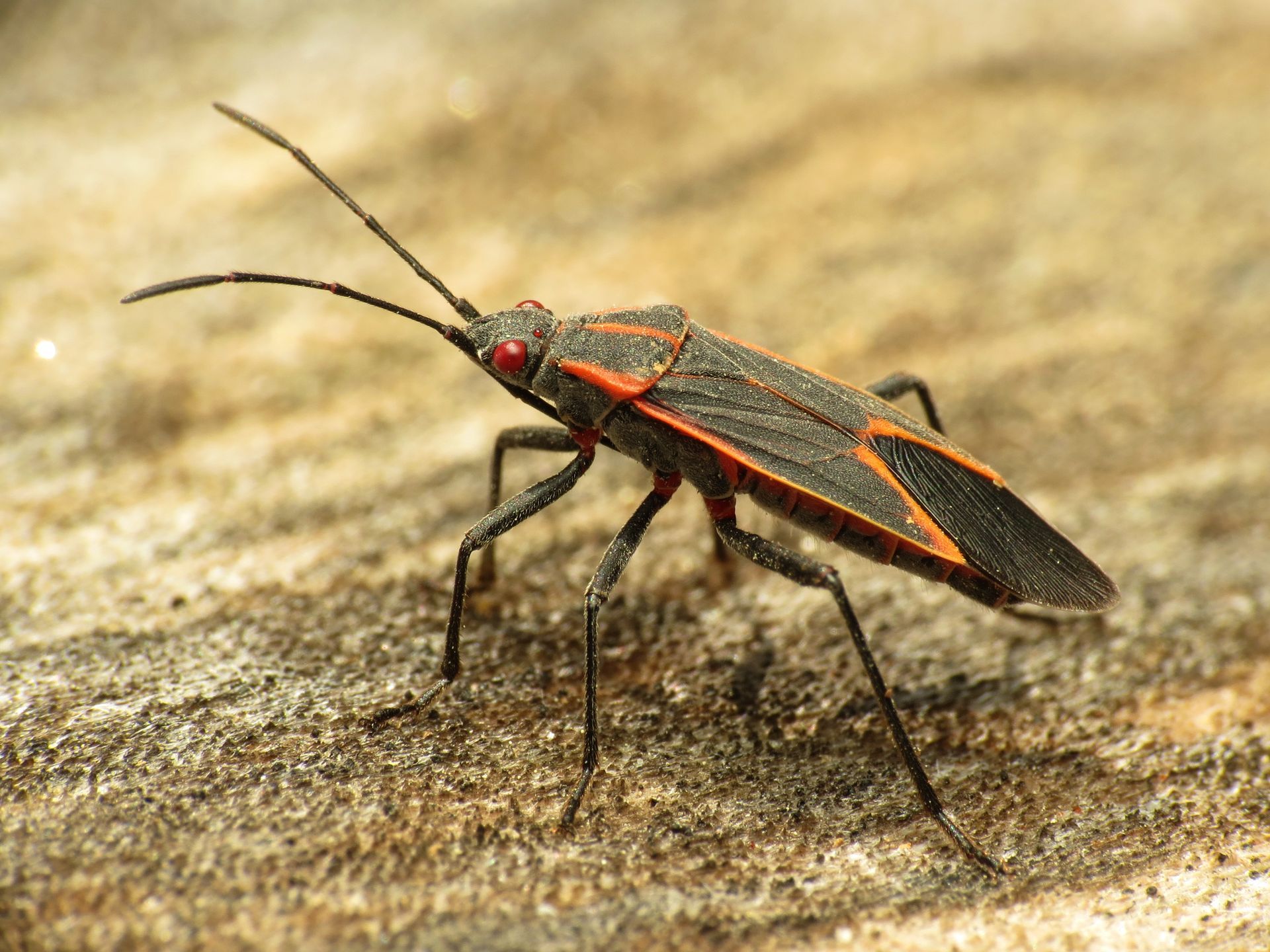
At Anteater Pest Control , we get a lot of questions about a specific, red-and-black insect that seems to appear out of nowhere in massive clusters. If you’ve seen these bugs congregating on your siding or windowsills, you’re likely dealing with Boxelder bugs. While they aren’t the most destructive pests we deal with, their presence in large numbers can be a major nuisance. Here is everything you need to know about identifying, managing, and preventing Boxelder bugs. Identification: Is it a Boxelder Bug? Before you take action, you have to know what you’re looking at. Boxelder bugs (Boisea trivittata) are easily identified by a few key features: Color : Dark brownish-black with three distinct reddish-orange stripes on the thorax (the area behind the head). Shape : An elongated, flattened oval shape, roughly 1/2 inch long. Wings : They have overlapping wings that form a distinct "X" shape on their backs. Why Are They Choosing Your Home? Boxelder bugs are highly attracted to heat and light. They are often found on the south and west-facing walls of buildings because those surfaces absorb the most sunlight. Their primary food source is the seed of the Boxelder tree, though they also frequent Maple and Ash trees. If you have these trees on or near your property, your home is essentially a "luxury resort" for them—providing food nearby and a warm place to rest. The "Nuisance" Factor The good news? Boxelder bugs do not bite, they don’t sting, and they don’t carry diseases. They also won't eat your food or damage your furniture. However, they present two main problems: Staining : If crushed, their body fluids can leave a permanent reddish-orange stain on curtains, carpets, and upholstery. Odors : When threatened or squashed, they release a pungent, foul-smelling defensive odor. Professional Solutions When Boxelder bugs move from a few sightings to a full-scale invasion, DIY methods often fall short. Because these bugs can hide deep within wall voids, professional intervention is the most reliable way to create a lasting perimeter barrier. At Anteater Pest Control, we use targeted treatments to stop these pests before they find their way into your living space. We don't just treat the symptoms; we help you identify the entry points to keep your home secure. Is your home becoming a hangout for Boxelder bugs?
Hibernating Bats — Waterford, MI — Anteater Pest Control Inc
By Admin November 26, 2020
Bats like to hibernate in homes where it is warm and dry. Keep a look out for these signs that bats are sleeping in your home this winter.
Autumn Insect Pest — Waterford, MI — Anteater Pest Control
By Admin October 31, 2020
As fall arrives, the warmth and food in your home could draw in some unwanted visitors. As you prepare your home for winter, be wary of the following bugs.
Squirrel — Waterford, MI — Anteater Pest Control
September 29, 2020
Do you have squirrels in your house? If you would like to better protect it, keep reading to learn more about squirrels in your home.
Snake — Waterford, MI — Anteater Pest Control
By websitebuilder September 1, 2020
Do you have snakes in your home? Read our blog to learn how snakes find their way into your home and how to prevent their presence.
By Admin July 31, 2020
What is West Nile virus, and do the mosquitoes in your area carry this disease? Take a look at what you need to know about this important issue.
By Admin June 29, 2020
Fleas, like so many insects and pests, can spread disease to humans. Learn more about the types of diseases fleas spread and how to treat them.
Opossums — Waterford, MI — Anteater Pest Control, Inc.
May 26, 2020
If you think an opossum lives in your home's exterior area, take a look at answers to the top opossum questions homeowners have so that you can take action.
Mosquito Bite — Waterford, MI — Anteater Pest Control, Inc.
By Admin April 1, 2020
Learn how to identify the differences between mosquito and tick bites so you know what kind of infestation you’re dealing with. Then call the pros.
Bats on the Ceiling — Waterford, MI — Anteater Pest Control
March 9, 2020
Bats can be cute when you see them in nature, but inside your home, they are more than just a nuisance. Bats can carry deadly diseases, like rabies, which means that if you have a bat, you need to take steps immediately to solve the problem. Removal Options Removal is best left to a professional due to the risks involved. Single Bat A single bat may get into the house through an open window or the chimney. The good news is that this usually is a one-time event and you don't have an infestation. The best course of action is to remove pets and people from the room with the bat, open all of the windows in the room, and then close off the room so the bat can't get into the rest of the house. With luck, the bat will find a window and leave. If you must handle the bat, wear gloves and do not touch the bat directly. The safest option is to call in a pest service if the bat doesn't leave on its own. Roosting Colony Sometimes your home provides the perfect place for daytime roosting. Little-used attics are most at risk, but bats may also colonize crawlspaces, spaces in your walls, or outbuildings. You should not try to remove an entire colony of bats on your own. A pest professional that is aware of local and federal wildlife laws should be called in to trap and remove the bats. Prevention Tactics Once you are free of the bats, your next step is to ensure that they cannot return. Exclusion If a bat can't get into your home, you can't have a bat problem — which is why exclusion is your main goal. Your pest service will inspect your home and find the likely entry points that the bats are using. You can also watch your home during the twilight hours to find where the bats are emerging. Once you know the likely entry points and have had all bats removed from the house, you can seal up the openings so the bats can't regain access to your home. Alternative Dwellings If you live in an area with a high bat population or would simply like to keep these beneficial insect-eaters nearby, then providing alternative dwelling options can be just the ticket for diverting bats away from your home. You can buy or build simple bat boxes. These boxes are typically attached to trees or poles to provide a more attractive roosting space for the bats. Cleanup Safety Bats are not clean animals. If a bat has been roosting in your home, then you will have droppings (called guano) and urine to deal with. Guano Sanitation Bat guano can carry histoplasmosis, a fungal spore that can cause a chronic respiratory disease. If you must try to clean up on your own, you need to cover all of your skin, wear gloves and eye protection, and use a respirator mask. All debris must be cleaned up and all surfaces must be sanitized with a bleach solution. Professionals will also use a HEPA vacuum, which has a strong filter that ensures none of the possible fungal pathogens remain in the air. Dead Bat Removal Extreme caution is necessary if there are dead bats in your home. Conditions like rabies can still be transmitted from dead animals. Wear gloves and do not touch the bat directly if you attempt to remove it yourself. The area where the bat was found must also be completely sanitized with a bleach solution. For more assistance with a bat in the home, contact Anteater Pest Control, Inc.